
Things to Do Around Burringbar and the Northern Rivers NSW – and Why Sattva Sanctuary Is the Ideal Place to Stay
Discover the natural beauty of Burringbar and the Northern Rivers NSW, from rainforest walks and hinterland landscapes to nearby beaches and villages. Located close to Gold Coast and Ballina airports, Sattva Sanctuary offers peaceful short-term accommodation designed for rest, reflection, and personal retreat—immersed in nature yet within easy reach of Byron Bay and the Tweed Coast.
The Northern Rivers NSW is widely recognised for its natural beauty, slower pace of life, and strong connection to land and community. Tucked within this region, Burringbar offers a quieter, less commercialised base from which to explore the coast, hinterland, and rainforest—while remaining close to major destinations and transport links.
For travellers seeking more than a typical holiday—those looking for stillness, nature, and genuine restoration—the Northern Rivers provides an ideal setting.
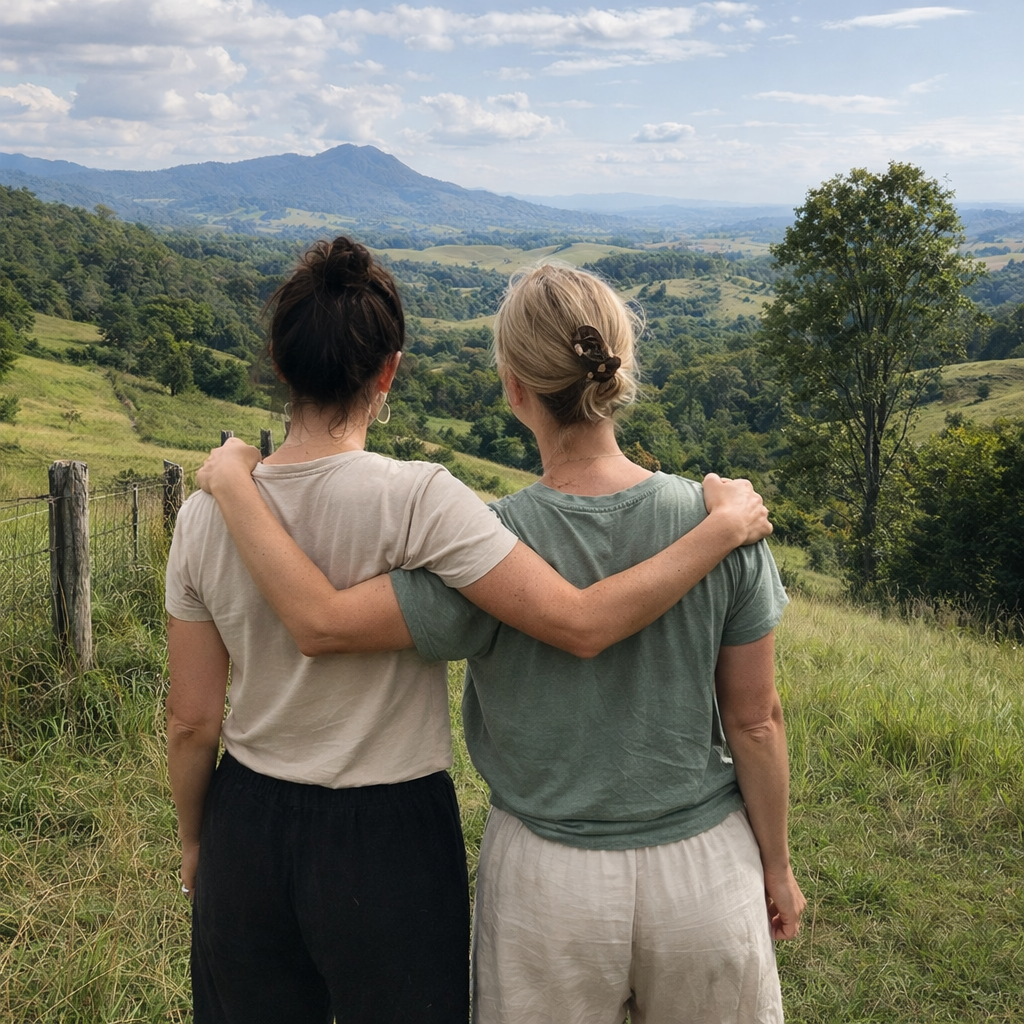
Tweed Valley view from Burringbar.
Exploring Burringbar and the Northern Rivers
Burringbar sits between the coast and the hinterland, making it a practical and peaceful starting point for a wide range of activities.
Visitors can explore nearby rainforest walks and national parks, with shaded trails, creeks, and waterfalls that reflect the region’s ancient landscape. The hinterland villages and scenic drives reveal rolling hills, farmland, and lookouts that offer a slower, more grounded experience than the busy coastal centres.
The coastline is also within easy reach. Beaches around the Tweed Coast and Byron hinterland provide opportunities for ocean swimming, long walks, and quiet mornings by the sea without needing to stay in the centre of high-traffic tourist towns.
Local cafés, small markets, and nearby villages contribute to the character of the area, supporting a sense of community and local living rather than mass tourism.
Nature as the Main Experience
What distinguishes the Northern Rivers is not a checklist of attractions, but the quality of the environment itself. The area is known for its lush vegetation, abundant birdlife, and calm rural atmosphere. Days are often shaped by natural rhythms—sunrise, birdsong, and changing light across the hills.
This environment naturally supports rest and reflection. Many visitors come to the region specifically to step back from overstimulation, reconnect with nature, and create space for clarity, creativity, or personal practice. The quietness of the land is not an absence of activity, but a presence of calm.
A Base Designed for Stillness: Sattva Sanctuary
Sattva Sanctuary offers short-term accommodation that aligns with the spirit of the region rather than competing with it. Set in a peaceful natural environment, it is designed for guests who value simplicity, privacy, and presence.
Unlike busy resorts or high-density accommodation, Sattva Sanctuary supports personal retreats, couples seeking time away, and individuals wanting space for rest, meditation, or creative work. The setting encourages slower mornings, time outdoors, and minimal distraction.
The accommodation is well suited to guests who wish to explore the Northern Rivers during the day and return to a quiet, grounded space in the evening.
Accessibility Without Compromise
One of the advantages of staying in Burringbar is its balance between seclusion and accessibility. Sattva Sanctuary is conveniently located within driving distance of:
Gold Coast Airport
Ballina Byron Gateway Airport
Byron Bay
The Tweed Coast and surrounding hinterland villages
This makes it suitable for both domestic and international visitors who want an easy arrival while avoiding crowded tourist centres.
An Ideal Place for Personal Retreat
For those seeking a personal retreat—formal or informal—the Northern Rivers offers conditions that are increasingly rare. The combination of natural beauty, low noise, and supportive local culture creates an environment where genuine rest is possible.
Staying at Sattva Sanctuary allows guests to experience the region not as spectators, but as participants in its natural rhythm. Whether the intention is reflection, renewal, or simply time away from routine, the setting supports a deeper, more meaningful stay.
Experience the Northern Rivers Differently
The Northern Rivers NSW is best experienced slowly. By choosing accommodation that emphasises quiet, nature, and intentional living, visitors can engage with the region in a way that goes beyond sightseeing.
Sattva Sanctuary offers a base that honours this approach—providing short-term accommodation that is accessible, peaceful, and deeply connected to its surroundings. For those seeking rest, clarity, and reconnection, it is a place to truly arrive.
To explore availability and learn more, visit https://sattvasanctuary.com.au/.
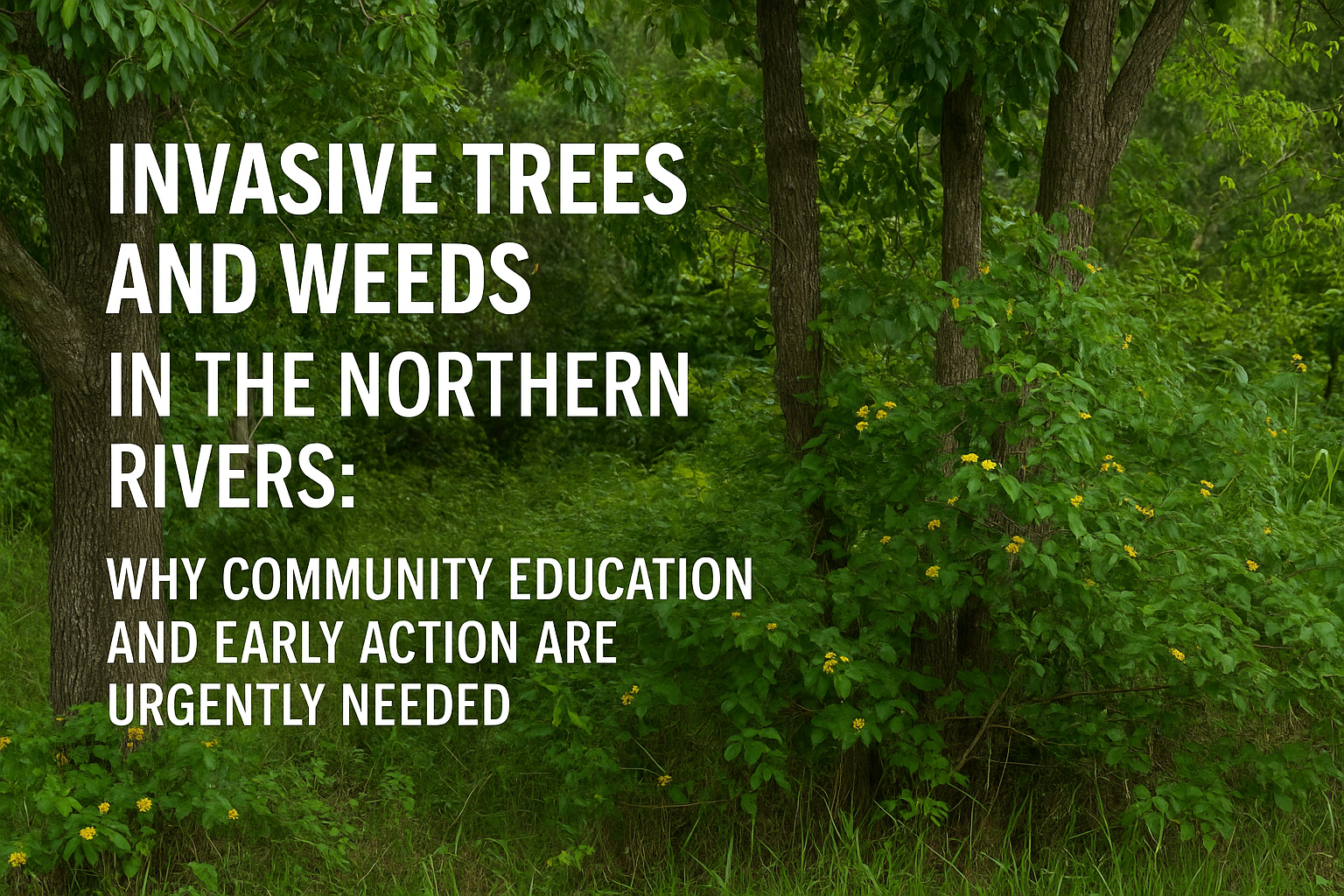
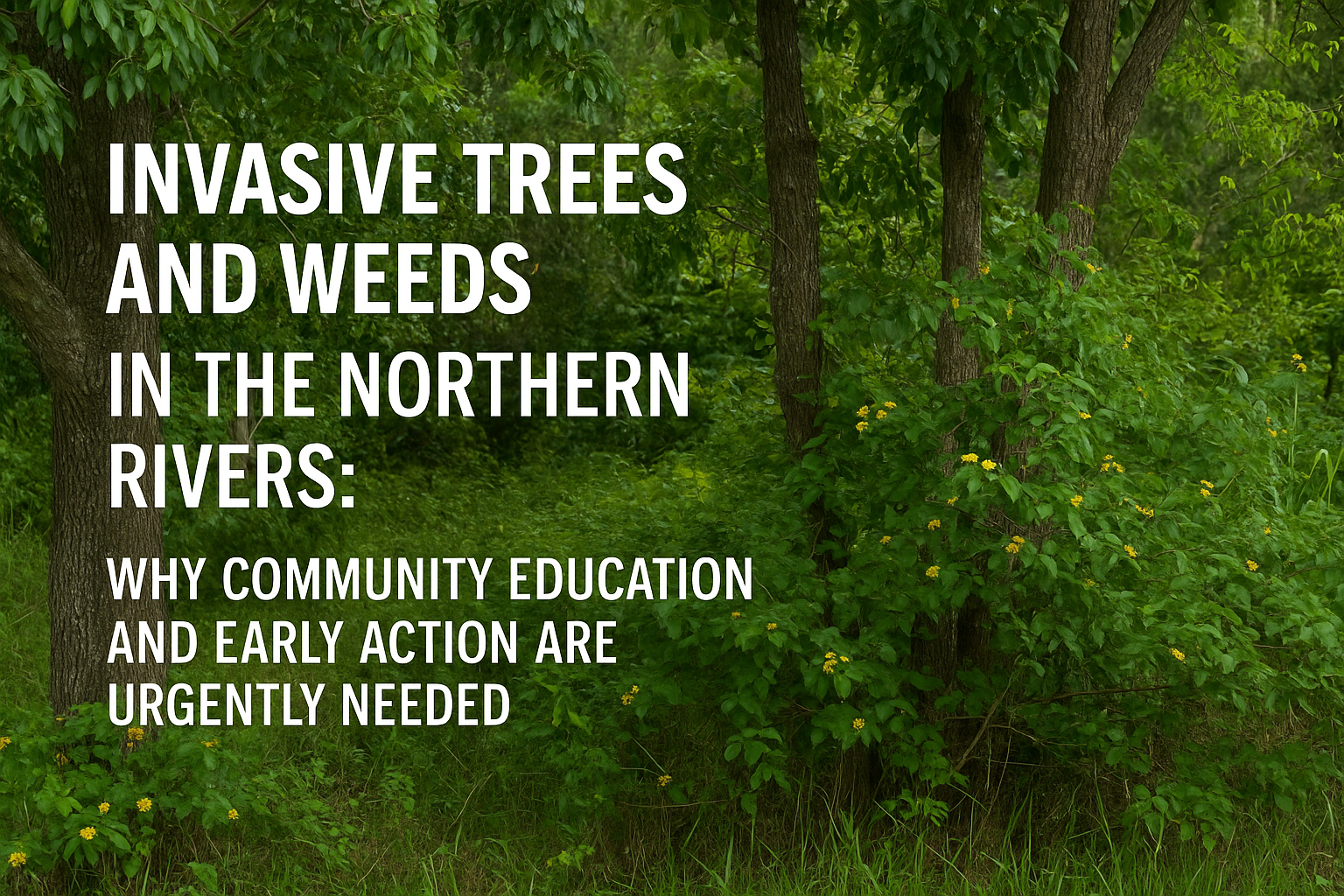
Invasive Trees and Weeds in the Northern Rivers:
Why Community Education and Early Action Are Urgently Needed
The Northern Rivers region of New South Wales is internationally recognised for its biodiversity, fertile soils, and unique subtropical ecosystems. From riparian rainforests to coastal wetlands and hinterland slopes, this region supports an extraordinary range of native plant and animal life. However, these ecosystems are under increasing threat from invasive trees and weeds that spread rapidly, displace native species, and permanently alter the land.
Managing invasive species is no longer only the responsibility of councils or landcare groups. It requires informed, proactive participation from landholders, residents, and community spaces to protect the ecological balance of the region.
What Are Invasive Trees and Weeds?
Invasive plants are species introduced intentionally or unintentionally outside their natural range that spread aggressively and cause environmental, economic, or social harm. In the Northern Rivers, many invasive trees and weeds thrive due to high rainfall, warm temperatures, and disturbed land following floods, clearing, or development.
Once established, invasive species often:
Outcompete native plants for light, water, and nutrients
Reduce habitat and food sources for native wildlife
Increase erosion and soil instability
Alter fire behaviour and water systems
Require significant resources to control if left unmanaged
Early identification and removal are critical. When invasive plants mature and spread seed, control becomes exponentially more difficult.
High-Risk Invasive Species in the Northern Rivers
Some of the most problematic invasive trees and weeds in the region include:
Camphor Laurel (Cinnamomum camphora) – Dominates riverbanks and floodplains, suppressing native regeneration and altering soil chemistry
Lantana (Lantana camara) – Forms dense thickets, restricting access and reducing biodiversity
Chinese Elm (Ulmus parvifolia) – Rapidly spreads along waterways and disturbed land
Privet (Ligustrum spp.) – Shades out native understory and spreads prolifically by seed
Cats Claw Creeper (Dolichandra unguis-cati) – Smothers trees and weakens forest structure
Many of these species are still commonly misunderstood or tolerated due to familiarity, despite their long-term ecological damage.
Why Education Is Essential
One of the greatest challenges in managing invasive species is lack of awareness. Many landholders do not realise that plants growing on their property are declared weeds or environmental threats. Others may not understand the difference between native lookalikes and invasive species.
Education empowers communities to:
Correctly identify invasive plants
Understand legal responsibilities under NSW biosecurity laws
Act early before infestations spread
Choose appropriate removal and regeneration methods
Avoid unintentionally spreading seeds or plant material
Without education, even well-meaning actions—such as dumping green waste or planting fast-growing shade trees—can worsen the problem.
The Role of Proactive Community Engagement
Effective weed management requires coordinated effort. Invasive plants do not respect property boundaries, waterways, or land zoning. One unmanaged site can re-seed an entire valley.
Proactive engagement includes:
Regular land inspections, especially after heavy rain or flooding
Prompt removal of seedlings before they establish
Responsible disposal of weed material
Replanting with appropriate native species to stabilise soil
Participation in local Landcare, bush regeneration, or council programs
When communities work together, the ecological recovery is faster, more resilient, and more cost-effective.
A Responsibility to Place
In regions like the Northern Rivers, caring for land is inseparable from caring for community, culture, and future generations. Stewardship is not about perfection; it is about awareness, responsibility, and ongoing effort.
At places like Sattva Sanctuary, environmental responsibility is part of a broader commitment to conscious living—recognising that inner wellbeing and outer ecology are deeply connected. Protecting native ecosystems is an act of respect for the land that sustains us.
Moving Forward
The spread of invasive trees and weeds is one of the most urgent and manageable environmental challenges facing the Northern Rivers today. With education, early action, and collective engagement, long-term damage can be prevented.
The health of this region depends not only on policy and professionals, but on informed, proactive locals who choose to act.

Reconnecting With Nature
At Sattva Sanctuary, we believe a retreat should do more than offer a place to stay — it should reconnect you with the quiet intelligence of nature. Our land is regenerating through mindful stewardship, native planting, and gentle human presence. Here, guests are invited to slow down, breathe deeply, and experience a sanctuary where both people and the environment can thrive.
— Why Staying at Sattva Sanctuary Is About More Than Just a Getaway
There’s a difference between simply taking a holiday — and coming somewhere that invites you to slow down, reconnect with the land, and leave a lighter footprint. At Sattva Sanctuary, we offer more than overnight stays. We offer a chance to live in harmony with nature. Here’s why a stay with us matters — and how we strive to care for land, wildlife, and future generations.
🌿 Nature, Regeneration & Biodiversity at Our Core
From day one, Sattva Sanctuary was conceived not as a resort — but as a living experiment in regenerative land-care. Our commitment includes:
Regenerative land and biodiversity care. We use regenerative farming practices, focusing on soil health, ecological balance, and supporting native flora and fauna. We keep chemical inputs to a minimum, to let nature thrive on its own terms.
Forest-garden & tree preservation. We have preserved the existing native tree canopy — avoiding unnecessary clearing — and have planted more than 250 fruit and native trees. This helps maintain micro-climates, enrich soil, and create habitat for birds, insects, and other wildlife.
Habitat restoration zone. Part of our property — a dedicated restoration area of approximately 9,020 m² — is set aside for native-species planting and ecological regeneration. This zone serves as a refuge for native species and a long-term promise to the land.
♻️ Waste, Energy & Water Stewardship
To tread lightly, we strive to reduce waste, conserve resources, and use renewable energy wherever possible:
We compost organic waste and kitchen scraps, returning nutrients to the land instead of sending waste to landfill.
Whenever possible, we use electric vehicles and equipment — minimising emissions, pollution, and noise that might disturb wildlife.
Most of our electricity comes from a solar installation, reducing reliance on fossil fuels.
Water usage and resources are carefully managed — protecting natural springs, groundwater and delicate local ecosystems.
🍽 Conscious Living: Farm-to-Table & Sustainable Sourcing
We embrace a food philosophy rooted in responsibility. Guests at Sattva Sanctuary experience food grown on-site — fresh produce, herbs and fruits — minimising food miles and external supply chain impacts.
When additional ingredients are needed, we prioritise locally and sustainably sourced produce, supporting the region’s growers and reducing environmental overhead.
📚 Learning, Immersion & Mindful Stays
Our vision goes beyond accommodation — we believe in education, awareness, and sustainable living:
Guests are invited to learn about regenerative agriculture, native-plant propagation, composting, forest-garden cultivation and low-impact living.
Our stays are designed to connect you deeply with nature — walking through forest-garden paths, observing native wildlife, hearing the quiet of the bush, watching the stars from a dark-skies site.
We encourage conscious, respectful engagement: being present, listening to nature’s rhythms, adapting to the land rather than imposing on it.
🏕 Low-Impact Tourism: Respectful Hospitality
At Sattva Sanctuary we believe smaller is gentler. With just six cabins and a maximum of 12 guests at any time, we avoid over-tourism, overcrowding, and excessive strain on natural resources.
To respect wildlife and the quiet of the bush — and to protect native fauna — we ask guests:
to avoid bringing or consuming meat on the property;
not to play loud music;
not to bring pets.
These simple requests help preserve habitat integrity, prevent disturbance to native species, and ensure that future guests — and future generations — can enjoy the same peaceful sanctuary we cherish.
🌱 A Living Promise: Restoration, Growth & Giving Back
Sattva Sanctuary is not static. It’s a living, evolving commitment to the land. We envision a place where habitat regenerates, biodiversity flourishes, and the earth we walk on grows richer with every season.
By staying with us, you’re not just a guest — you’re part of this journey. Every tree planted, every composted scrap, every quiet night under the stars, and every respectful step on the forest floor contributes to a living promise: that we can travel, rest, and reconnect — without costing the earth.

Eco-Wellness: The Science Behind Yoga, Meditation and Nature Connection.
In a world that often moves at breakneck speed, there is a growing yearning for something more profound, more meaningful. People seek solace, connection and harmony not just within themselves, but also with the world around them—it's no wonder that yoga and meditation have become increasingly essential practices for maintaining mental and emotional well-being. The scientific studies behind these practices underscore their profound impact on the human nervous system and overall health. And when combined with the nurturing embrace of nature, they take on an even deeper significance.
Scientific research has illuminated the myriad benefits of yoga and meditation. These practices, which often emphasize deep, intentional breathing and a focus on the present moment, have been shown to reduce stress, lower anxiety levels and enhance overall mental clarity and well-being. As we delve deeper into our practices, we begin to realise that our connection to the external world is just as crucial as our inner journey.

It’s about forging a meaningful relationship with the environment. It's about understanding that every mountain, river and forest has a story to tell and that we have a role to play in its preservation.
Nature provides a serene backdrop that naturally draws us into a state of inner calm and presence. The sights and sounds of nature, from the rustling leaves to the melodic calls of birds, act as anchors for our awareness. These sensory experiences ground us in the present moment.
Researchers have found that the sounds of nature, such as flowing water, birdsong and rustling leaves, can stimulate the production of alpha brain waves associated with relaxation and creativity. The very act of listening to the harmonious symphony of nature can help regulate our heart rate and breathing, creating an atmosphere conducive to inner peace and mental clarity.
The synergy between spirituality and nature is undeniable. Through meditation and yoga, we learn to respect and honour our inner world. These practices awaken our consciousness, teaching us compassion, gratitude and reverence for all life forms.

Turning Steep Clay Hills into a Chemical-Free Fruit Orchard
At Sattva Sanctuary, we embarked on a remarkable journey of transforming challenging terrain—a steep hill with pure clay soil—into a thriving fruit orchard, all without the use of harmful chemicals. Our mission was to create a lush and vibrant haven where nature and sustainable agriculture coexist in perfect harmony.
@eran @ritika: I need to have more details to write this blog