
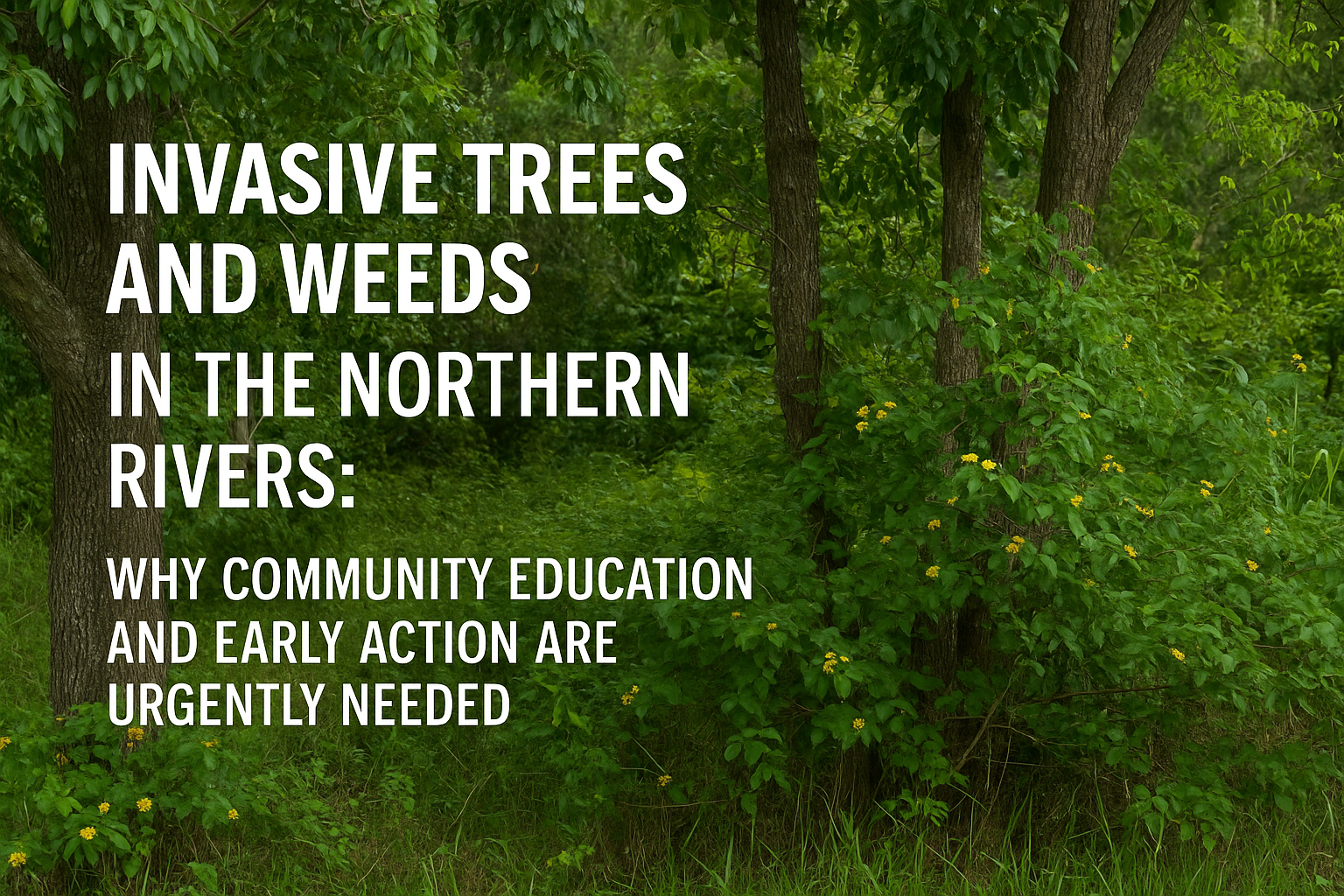
Invasive Trees and Weeds in the Northern Rivers:
Why Community Education and Early Action Are Urgently Needed
The Northern Rivers region of New South Wales is internationally recognised for its biodiversity, fertile soils, and unique subtropical ecosystems. From riparian rainforests to coastal wetlands and hinterland slopes, this region supports an extraordinary range of native plant and animal life. However, these ecosystems are under increasing threat from invasive trees and weeds that spread rapidly, displace native species, and permanently alter the land.
Managing invasive species is no longer only the responsibility of councils or landcare groups. It requires informed, proactive participation from landholders, residents, and community spaces to protect the ecological balance of the region.
What Are Invasive Trees and Weeds?
Invasive plants are species introduced intentionally or unintentionally outside their natural range that spread aggressively and cause environmental, economic, or social harm. In the Northern Rivers, many invasive trees and weeds thrive due to high rainfall, warm temperatures, and disturbed land following floods, clearing, or development.
Once established, invasive species often:
Outcompete native plants for light, water, and nutrients
Reduce habitat and food sources for native wildlife
Increase erosion and soil instability
Alter fire behaviour and water systems
Require significant resources to control if left unmanaged
Early identification and removal are critical. When invasive plants mature and spread seed, control becomes exponentially more difficult.
High-Risk Invasive Species in the Northern Rivers
Some of the most problematic invasive trees and weeds in the region include:
Camphor Laurel (Cinnamomum camphora) – Dominates riverbanks and floodplains, suppressing native regeneration and altering soil chemistry
Lantana (Lantana camara) – Forms dense thickets, restricting access and reducing biodiversity
Chinese Elm (Ulmus parvifolia) – Rapidly spreads along waterways and disturbed land
Privet (Ligustrum spp.) – Shades out native understory and spreads prolifically by seed
Cats Claw Creeper (Dolichandra unguis-cati) – Smothers trees and weakens forest structure
Many of these species are still commonly misunderstood or tolerated due to familiarity, despite their long-term ecological damage.
Why Education Is Essential
One of the greatest challenges in managing invasive species is lack of awareness. Many landholders do not realise that plants growing on their property are declared weeds or environmental threats. Others may not understand the difference between native lookalikes and invasive species.
Education empowers communities to:
Correctly identify invasive plants
Understand legal responsibilities under NSW biosecurity laws
Act early before infestations spread
Choose appropriate removal and regeneration methods
Avoid unintentionally spreading seeds or plant material
Without education, even well-meaning actions—such as dumping green waste or planting fast-growing shade trees—can worsen the problem.
The Role of Proactive Community Engagement
Effective weed management requires coordinated effort. Invasive plants do not respect property boundaries, waterways, or land zoning. One unmanaged site can re-seed an entire valley.
Proactive engagement includes:
Regular land inspections, especially after heavy rain or flooding
Prompt removal of seedlings before they establish
Responsible disposal of weed material
Replanting with appropriate native species to stabilise soil
Participation in local Landcare, bush regeneration, or council programs
When communities work together, the ecological recovery is faster, more resilient, and more cost-effective.
A Responsibility to Place
In regions like the Northern Rivers, caring for land is inseparable from caring for community, culture, and future generations. Stewardship is not about perfection; it is about awareness, responsibility, and ongoing effort.
At places like Sattva Sanctuary, environmental responsibility is part of a broader commitment to conscious living—recognising that inner wellbeing and outer ecology are deeply connected. Protecting native ecosystems is an act of respect for the land that sustains us.
Moving Forward
The spread of invasive trees and weeds is one of the most urgent and manageable environmental challenges facing the Northern Rivers today. With education, early action, and collective engagement, long-term damage can be prevented.
The health of this region depends not only on policy and professionals, but on informed, proactive locals who choose to act.
